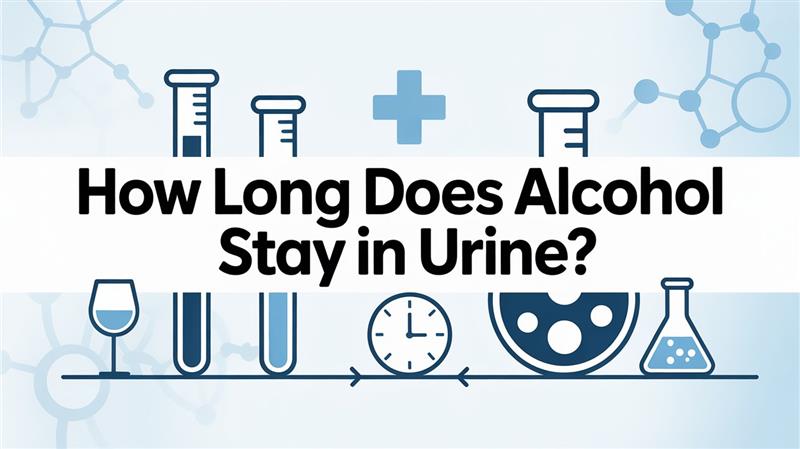
The knowledge of the alcohol retention time is important to health, safety and in some situations like workplace test. The alcohol flows through the blood comparatively easily though when a test is carried out such as urine it could be detected way longer say around 80 hours depending on the type of test.
All this has been made easier in this manual through the real questions that one wants to know.
What is Alcohol Addiction?
Alcoholism is a chronic health condition whereby an individual is either physically or psychologically addicted to alcohol. It affects the decision making and emotional control and can cause health risks like Alcohol overdose and liver damage.
Taking into consideration that the alcohol use starts to interfere with your life, relationships with other people, or work, you may require help.
How long does alcohol stay in urine?
Alcohol can also be detected in the urine 12-24 hours but further testing like EtG (Ethyl Glucuronide) can give an affirmative result as long as 48-80 hours after the last drink.
Quick Breakdown:
Standard urine test: 12-24 hours
EtG urine test: Up to 80 hours
Heavy drinking: This can be observed at times up to 5 days.
How long does alcohol stay in the system overall?
The alcohol does not leave the body parts simultaneously:
Blood: 6-12 hours
Breath: up to 24 hours
Urine: 12-80 hours
Hair: up to 90 days
The process of metabolism is a fixed procedure that is conducted by your body to decompose and get rid of alcohol and it predominantly happens in the liver.
How the body metabolizes alcohol (Easy Explanation)
Your liver processes by an hour about one standard alcoholic drink, as soon as alcohol enters your blood stream. Such rate depends on a variety of factors:
- Age
- Gender
- Percentage of weight and percentage of water in the body.
- Liver health
- Amount consumed
- Drinking frequency
The reason why you cannot make it faster with coffee, exercise or water is because of low and constant metabolism.
How long does it take alcohol to leave your system?
Most of the alcohol will be out of your system after 24 hours, but even the urine tests (EtG testing in particular) will continue to detect the presence of alcohol even after you are no longer under the impression that you are drunk.
The body will go through time before the alcohol can be reacted to and not tricks.
How long does it take to clear alcohol from a urine test?
To remove every drop of the alcohol in these urines:
- Light drinking: 24-48 hours
- Moderate drinking: 48-72 hours
- Heavy drinking: 72-120 hours
The tests of EtG are detected longer, because it detects alcohol metabolites, rather than alcohol.
Can drinking water flush out alcohol faster?
No.
Urine is water soluble and water does not hasten the metabolism of alcohol. Alcohol can only be processed by your liver and this is at a fixed rate.
What is Alcohol overdose and how is it related?
The alcohol overdose or alcohol poisoning is the condition that takes place when one consumes large quantities of alcohol over a restricted time.
Symptoms include:
Confusion
Vomiting
Slow breathing
Unresponsiveness
Low body temperature
Detection windows also increase due to alcohol overdose because your body struggles to absorb the excessively sized alcohol.
Emergency help is needed in case of an overdose.

How to get help when alcohol becomes a problem
If you’re worried about:
- The number of hours that alcohol is held in the system.
- Frequent drinking
- Failing alcohol screenings
- Withdrawal symptoms
- Loss of control
- there may be need that the time to consult a professional is now.
Through treatment, you will be stabilized, improve your health as well as reconnect with people.
Services in the Florida Atlantic coast treatments solutions are:
- Medical detox
- Alcohol addiction treatment.
- Outpatient and residential care.
- Mental health support
- Non judgmental compassionate care.
Get Help Today at Florida Atlantic Coast Treatment Solutions
In case you are concerned about how consumption of alcohol is likely to impact your health, day-to-day routine, or future exams, then this is the moment to find the appropriate help. We will offer confidential assessment, compassionate counseling and evidence-based treatment programs that meet your unique needs at Florida Atlantic Coast Treatment Solutions.
Our team is committed to assisting you to take control back, to rebuild confidence and to get on the long term recovery. You do not need to struggle with this single-handedly, Call us at (844) 643-2287. Get in touch with us today and make a first step towards a safer and healthier future.
FAQs About Alcohol in Urine (Highly Searched Questions)
How long does alcohol stay in a urine chart?
Here’s a simplified reference chart:
Test Type | Detection Time |
Standard Urinalysis | 12–24 hours |
EtG/EtS Urine Test | 48–80 hours |
Heavy Drinking | Up to 120 hours |
Does the consumption of water aid in flushing out alcohol?
Water is also useful in preventing dehydration but alcohol is not quicker dissolved in it. The liver controls the pace.
What is the duration of time to clean up in order to pass a urine drug test?
The amount of alcohol needed to pass an EtG alcohol urine test is 48-80 hours alcohol-free, depending on the amount consumed.
What do you need to be drunk to be a non-pass on a urine test?
EtG tests are able to detect alcohol that is very low- even 100 ng/mL in some cases.
Even moderate drinking is capable of provoking a positive outcome.
Does alcohol have any impact on 24-hour urine test?
Yes.
The impact of alcohol on test accuracy may include fluid balance, kidney functioning, and the chemical markers.
What do you do to clean yourself prior to a urine test?
No safe or legal method exists of cleaning alcohol out of urine very fast.
Time is the only efficient means.
Which will be the length of time of a positive urine test?
Urine can test positive for:
- Standard test: 12-24 hours
- EtG test: 48-80 hours
- Heavy drinking: Up to 5 days
What is the way to urinate you system out before a urine drug test?
No sure way of getting alcohol out fast. Hydration can reduce concentration although it does not reduce metabolites.