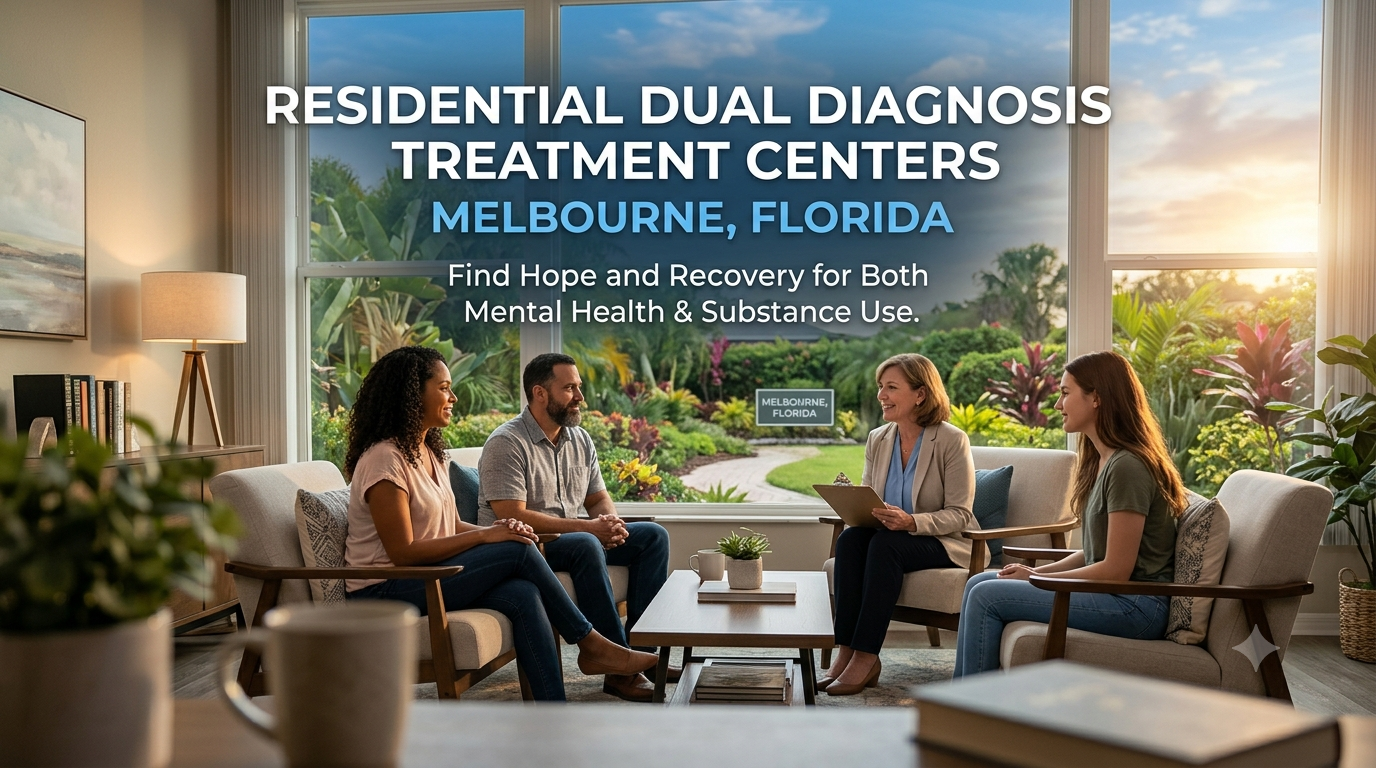
Inpatient rehabs are a type of structured care where people reside at the location and access a medically supervised drug, behavioral, or healthcare treatment program to address drug use and mental or healthcare conditions. Florida Atlantic Coast Treatment Solutions offers the following treatment solutions in Melbourne, Florida: Residential Treatment, Detox, Individualized Therapies, Trauma-Informed Care, and Continuing Recovery Support.
Deciding on the most suitable inpatient rehab facilities in Melbourne, FL, can be overwhelming, especially if you go through the program when you are in dire need. The clear benefit of inpatient rehab is that you’re getting yourself away from the triggers in the world and focused solely on recovery and you have unwavering support from trained professionals. By offering a structured environment, residential facilities can be a place where individuals struggling with addiction, mental health issues, or co-occurring disorders can start making meaningful changes.
Key Takeaways
- Inpatient rehab offers a controlled setting that has continual access to professional assistance.
- At Florida Atlantic Coast Treatment Solutions in Melbourne, substance use and mental health treatment are both a priority.
- Detox, residential and individual and group counseling, trauma informed, and aftercare planning may all be included in treatment.
- To achieve appropriate levels of care, individuals’ medical, psychological, substance use, and recovery needs will be assessed.
- Another residential solution in the Solutions Healthcare family, DeLand Treatment Solutions, is for those who are currently looking for addiction and mental health services.
- So, not all centers listed as “inpatient rehab” offer the same kind of care, and it’s crucial to find out the kind of care before entering the facility.
What is Inpatient Rehab?
Inpatient rehab is a type of residential care program where people reside at a rehab center while receiving systematic care. While outpatient treatment may be out of one’s home after outings and scheduled medical and recovery services, residential rehab, according to Recovery.com, is a place where patients reside within a facility with other patients for a period of 28 days or more and undergo the full treatment regimen.
Depending on the program option chosen, the length of care may vary from person to person depending on his/her needs and progress.
This structure can help an individual who is suffering from problems getting treatment for alcohol, opioids, prescription pills, cocaine, or other drugs to sustain early recovery. It can also benefit individuals with depression, anxiety, trauma, and PTSD as well as bipolar disorder and other mental health issues that are co-occurring with substance use.
Looking for trusted inpatient drug and alcohol rehab in Melbourne, FL? Contact Florida Atlantic Coast Treatment Solutions today for confidential, 24/7 placement and personalized recovery care.
Top 5 Inpatient and Residential Rehab Options in the Melbourne Area
The numbers in the table below are provided by treatment-center information gathered via Recovery.com. It’s worth noting that the Melbourne listings on Recovery.com include facilities in Melbourne as well as in surrounding communities. Don’t imply DeLand Treatment Solutions is in Melbourne when it is actually located in DeLand.
Rehab or Treatment Provider | Location | Care / Focus | Key Details |
Florida Atlantic Coast Treatment Solutions | Melbourne, FL | Residential, substance use and mental health | 24/7 residential support, detox, individualized treatment, trauma-informed care, therapy, relapse prevention and aftercare |
DeLand Treatment Solutions | DeLand, FL | Residential, substance use and mental health | Personalized addiction treatment, evidence-based therapies, detox and ongoing recovery support |
JourneyPure Melbourne | Melbourne, FL | Outpatient | Substance use and co-occurring mental health services, including medication-assisted treatment and clinical support |
The Care Clinic Melbourne Office | West Melbourne, FL | Outpatient | Substance use and mental health treatment, including individual therapy, CBT and group support |
Orlando VAMC Viera VA Clinic | Melbourne/Viera area | Hospital and behavioral health services | VA healthcare resource serving eligible veterans |
Recovery.com’s listing states that DeLand Treatment Solutions is a “residential treatment provider” located in nearby DeLand, while Florida Atlantic Coast Treatment Solutions is listed as a “residential” provider located in Melbourne. JourneyPure Melbourne, The Care Clinic (outpatient), and Orlando VAMC Viera VA Clinic (hospital) are listed as outpatient providers.
This distinction matters. When looking for inpatient rehab in Melbourne, FL, it is important to inquire about the exact type of care being offered in the facility, so that you don’t assume that every reference to rehab is someone looking for rehab in which the facility provides 24-hour residential treatment.
Florida Atlantic Coast Treatment Solutions in Melbourne, FL
If you’re looking for residential drug and mental health care that is best in Melbourne, look no further than Florida Atlantic Coast Treatment Solutions, also known as FACTS.
According to Recovery.com’s verified profile, FACTS is a residential facility that addresses both mental health and substance abuse issues. Solutions Healthcare is the home of the center, at 1700 Wuesthoff Drive in Melbourne, Florida. The profile also includes information on potential Joint Commission accreditation as well as individual treatment, certified professionals, trauma-informed care, detox and addiction recovery services, among others.
FACTS is a whole-person approach. This includes a treatment that goes beyond simply stopping drug use. The team also takes into account emotional wellness, trauma, relationships, coping mechanisms, and context that can be factors in repeated drug use.
The treatment model in the facility can comprise of:
- Residential treatment
- Detoxification
- Individual counseling
- Group therapy
- Trauma-informed treatment
- Mental health treatment
- Substance use treatment
- Relapse prevention planning
- Medication management
- Life-skills development
- Peer support
- Aftercare planning
- Sober living & recovery support
The length of residential treatment can vary from person to person, but it’s generally 30 days or longer, according to Recovery.com.
Additionally, there are private rooms and screened-in porches, which will allow for privacy and reflection during treatment. In addition to clinical treatment, FACTS integrates practices like trauma care, art and yoga, according to Recovery.com.
What Treatments Are Available at an Inpatient Rehab?
There is never enough to a one-size-fits-all treatment. A successful residential treatment program starts with the understanding of what the individual needs and then establishing a treatment plan.
Treatment can be applied for addiction as well as mental health issues at Florida Atlantic Coast Treatment Solutions. This is especially crucial for people suffering from co-occurring disorders. For instance, an individual might drink alcohol to combat anxiety, or ingest medication to cope with emotional turmoil, or take drugs when working through discomforting trauma.
Treatment may be a Combination of Layers of Support.
- Detox: Detox can assist the body to start flushing substances, and professionals can oversee the process. There are withdrawal symptoms that can be very serious, and therefore it’s best to go through detox under the correct medical supervision.
- Individual therapy: Each person has time to explore substance abuse, trauma, relationships, emotional patterns, and goals through individual therapy sessions.
- Group therapy: Group sessions provide opportunities for individuals to learn from others, practice communication, get feedback, and decrease the feelings of isolation that many people feel as part of addiction.
- Trauma-Informed Care: Trauma can impact the way in which people think, feel, act and build relationships with others.
- Relapse prevention: Clients learn all the possible triggers, how to manage their cravings, coping responses, and some practical strategies to have when challenged with triggers after treatment.
- Aftercare: Recovery doesn’t stop at the end of rehab. FACTS is defined as a support system that can include therapy, peer support, medication management, life skills training, sober living, alumni support, and education programs.

DeLand Treatment Solutions and Residential Recovery Support
Another residential treatment provider that is affiliated with Solutions Healthcare is DeLand Treatment Solutions. It may sound like it’s in DeLand and not Melbourne, but it could be important for those who are comparing residential addiction treatment and therapy for mental health in Central Florida.
According to their profile on Recovery.com, DeLand Treatment Solutions is a residential treatment center that offers treatment for substance use and mental health concerns through customizable treatment, science-based therapies, and ongoing support. It offers treatment for such things as substance abuse (led by alcohol, opioids, heroin, methamphetamine, cocaine, and prescription drug abuse) and depression.
If a person has expressed a desire for care in his or her home and is not opposed to receiving care that may be performed away from Melbourne, then DeLand may be a valid option to consider. Again, it should be determined based on clinical need, the available services and insurance providers, location, and type of support required.
How to Choose the Right Inpatient Rehab in Melbourne, FL
When one decides on a treatment center, it is more than just the place or looks. Ask real questions before deciding:
- Is the facility residential or outpatient?
- Addresses the substance(s) involved?
- Does it include coverage for co-occurring mental health issues?
- Does detox exist when clinically appropriate?
- What types of therapy are offered?
- What is the usual length of treatment?
- What is residential treatment after?
- Which insurance policies are available?
- Does the facility have an accreditation or license as required?
- If the person needs to become less supported during treatment, what happens?
When looking at different programs, accreditation may be one factor to consider. The Joint Commission provides an explanation that its process of accreditation looks at areas concerning safety, quality, treatment, facilities, leadership and patient care that are related to behavioral health.
Using SAMHSA’s FindTreatment.gov is the way to locate mental health and substance use services using a confidential treatment locator for the United States.
Who May Benefit From Residential Addiction Treatment?
Residential treatment could be recommended when a person needs much more support than outpatient treatment gives. It could be individuals who keep relapsing, have intense compulsions to use drugs and alcohol, have risky usage, lack family stability, and have serious mental health issues.
It can also be useful when there are many triggers in the person’s home environment or past outpatient interventions haven’t been sufficient to stabilize the person.
But not all of them should necessarily go for residential treatment. The intensity of care necessary should depend on several factors, such as the substance use pattern that they exhibit, the danger that they pose, their mental health, physical health, and well-being; their level of safety; their supporting network; and their history of treatment, including advice given by a qualified professional.
How Long Does Inpatient Rehab Last?
No one size fits all treatment length. According to the information available aon Recovery.com, residential programs tend to last 30 to 90 days, although some may be as short as 14 days or longer depending on the special needs and the level of care required.
Is Inpatient Rehab the Same as a Hospital Rehabilitation Facility?
No. This separation is particularly important for Medicare.
A substance use residential treatment program is a facility that provides intensive rehab for substance use disorders, rather than a Medicare-certified inpatient rehabilitation facility (IRF), where care is provided for physical, occupational, or speech rehabilitation following serious illness, surgery, or injury. Medicare states that intensive rehabilitation services, medical supervision, and coordinated care are part of IRF care.
An “inpatient rehab” stay can, therefore, rehabify to medical rehab instead of rehab being to treat an addiction.
What Does Medicare Cover for Inpatient Rehabilitation?
Inpatient rehab centers that are Medicare-certified can offer coverage for medically necessary treatment when eligibility criteria are met, under Medicare Part A. According to Medicare, for 2026, there is a zero coinsurance per day for all inpatient rehabilitation days 60 and fewer covered after the Part A deductible is met. Days 61-90 will have a coinsurance, which may also continue into lifetime reserve days.
It is important to note that Medicare coverage can be discussed directly with Medicare and the facility in question, as addiction treatment facilities, residential behavioral health treatment facilities, skilled nursing, and inpatient rehab facilities are all types of facilities.
Ready to Explore Treatment in Melbourne?
You don’t have to go through addiction and/or mental health challenges alone. Blown away from substance use and mental health issues, Florida Atlantic Coast Treatment Solutions offers residential treatment in Melbourne, Fl.
First chat doesn’t have to be about treatment. It can just be the opportunity to learn more about your choices, get some answers about your questions, talk about your needs, and to see if residential care is the right fit for you.
Connect with Florida Atlantic Coast Treatment Solutions to find out more about our residential treatment, detox, mental health, and insurance options, and the next steps to recovery.
Frequently Asked Questions About Inpatient Rehab in Melbourne, FL
How long is the average inpatient rehab stay?
Residential addiction treatment commonly lasts about 30 days, but the appropriate length varies. Recovery.com notes that residential programs can range from roughly 14 to 90 days. Treatment length depends on clinical needs, progress, safety, and continuing-care recommendations.
What is Kindred Hospital in Melbourne?
Kindred Hospital is associated with long-term acute care rather than standard residential addiction rehab. Long-term acute care hospitals generally serve medically complex patients who need extended medical treatment and supervision. Always confirm the current facility and services before seeking admission.
What is the best hospital in Melbourne, Florida?
There is no single hospital that is objectively best for every person. The appropriate hospital depends on the medical problem, urgency, insurance, specialty services, and physician recommendations. For addiction treatment, a specialized behavioral health or residential program may be more appropriate.
What is the Nursing and Rehabilitation Center of Melbourne?
A nursing and rehabilitation center generally provides skilled nursing, therapy, rehabilitation, and support for people recovering from illness, injury, surgery, or changes in physical functioning. It is different from residential addiction treatment and should not automatically be considered an addiction rehab.
How do you qualify for inpatient rehab?
Eligibility depends on the type of inpatient rehab. Residential addiction treatment typically involves an assessment of substance use, mental health, safety, withdrawal risk, and treatment needs. Medicare-certified IRFs have separate medical and functional requirements established by Medicare and CMS.
How long will Medicare allow you to stay in a rehab facility?
For a Medicare-covered inpatient rehabilitation facility, coverage depends on medical necessity and benefit-period rules. In 2026, Medicare lists coverage through day 150 when applicable, with different patient costs after day 60 and use of lifetime reserve days after day 90.
What are the 13 qualifying diagnoses for inpatient rehab?
CMS’s IRF classification rules reference 13 qualifying conditions, including stroke, spinal cord injury, congenital deformity, amputation, major multiple trauma, hip fracture, brain injury, neurological disorders, burns, and specified arthritis or joint-replacement conditions. Diagnosis alone does not determine admission.
How many days does Medicare pay 100% for rehab?
For Medicare-covered inpatient rehabilitation, after the applicable Part A deductible, Medicare lists days 1 through 60 at $0 daily coinsurance in 2026. This does not mean every residential addiction program is Medicare-covered, so the facility and coverage category must be verified.
What are the three types of rehab?
In addiction treatment, the major levels commonly discussed are residential treatment, intensive outpatient treatment, and outpatient treatment. Residential provides live-in structure, while outpatient programs allow clients to live at home. Detox may occur before or alongside these levels depending on clinical needs.
Disclaimer
This article is intended for general educational and informational purposes only. It is not medical advice, a diagnosis, or a substitute for evaluation by a qualified healthcare professional. Treatment recommendations should be based on an individual assessment. If someone is experiencing a medical or psychiatric emergency, seek emergency assistance immediately.
Content References
The treatment center information in this article was reviewed using Recovery.com’s Melbourne, Florida, treatment directory and provider profiles, including information about Florida Atlantic Coast Treatment Solutions and DeLand Treatment Solutions.
Additional information about Medicare inpatient rehabilitation coverage was reviewed through official Medicare and CMS resources. Information about treatment locators and behavioral health resources was reviewed through SAMHSA, while accreditation information was reviewed through The Joint Commission.
Authoritative resources: