In This Blog
- Understanding dual diagnosis and co-occurring disorders
- Why addiction and mental health ailments go hand-in-hand
- Dangers of treating addiction or mental health alone
- How dual diagnosis treatment centers work
- Evidence-based therapies used in integrated care
- Choosing an ethical dual diagnosis treatment center
The mental health conditions and addiction are usually complementary, and the symptoms of the two are similar; therefore, the diagnostics, treatment, and recovery process become more challenging. Substance use disorders are often co-morbid with depression, anxiety, disorders associated with trauma, and mood instability, and strengthen one another, complicating the recovery process in cases when they are considered individually.
A dual diagnosis treatment center is an establishment that deals with the treatment of substance use disorders and mental health conditions simultaneously, rather than prioritizing one over another. This practice is a decades-old research that upholds the assumption that better results can be had when interacting conditions are managed concurrently.
What Dual Diagnosis Means
Dual diagnosis refers to the occurrence of a drug use disorder and a mental health disorder simultaneously. These comorbidities do not work independently of each other but interrelate and enhance the symptoms, relapse, and the burdens of treatment planning.
Examples of common mental conditions that accompany dual diagnosis include:
The standard of treatment for co-occurring disorders is believed to be integrated treatment.
Why Addiction and Mental Health Conditions Co-Occur
Mood regulation, stress response, and reward processing are some of the neurological processes that share a similarity in substance use and mental health conditions. Substance use may be a momentary coping mechanism to emotional distress, yet a latent mental expression can result in further substance use.
The causes of this include:
- Genetic vulnerability
- Trauma exposure
- Chronic stress
- Maladaptive coping mechanisms.
This reciprocity relationship adds to the continuation of the two conditions.
Risks of Treating Addiction Alone
Addressing substance use without the sequential treatment of the underlying mental health problem tends to address any underlying emotional triggers to the use of the substance. This may cause emotional malregulation that may cause increased cravings and relapse.
Typical effects of single therapy for addiction are as follows:
- Incessant anxiety or depression.
- Poor treatment engagement
- Increased relapse rates
- Incomplete recovery
- The reduced risks are achieved through integrated care.
Risks of Treating Mental Health Alone
There is the likelihood that without mental health treatment directed towards substance use progression, progress may stop or go back. Drug consumption can disrupt the effectiveness of treatment and medication adherence.
The possible consequences are:
- Medication non-adherence
- Symptom misinterpretation
- Increased safety concerns
- Treatment disruption
Treatment of dual diagnosis prevents disconnected treatment.
Core Principles of Dual Diagnosis Treatment Centers
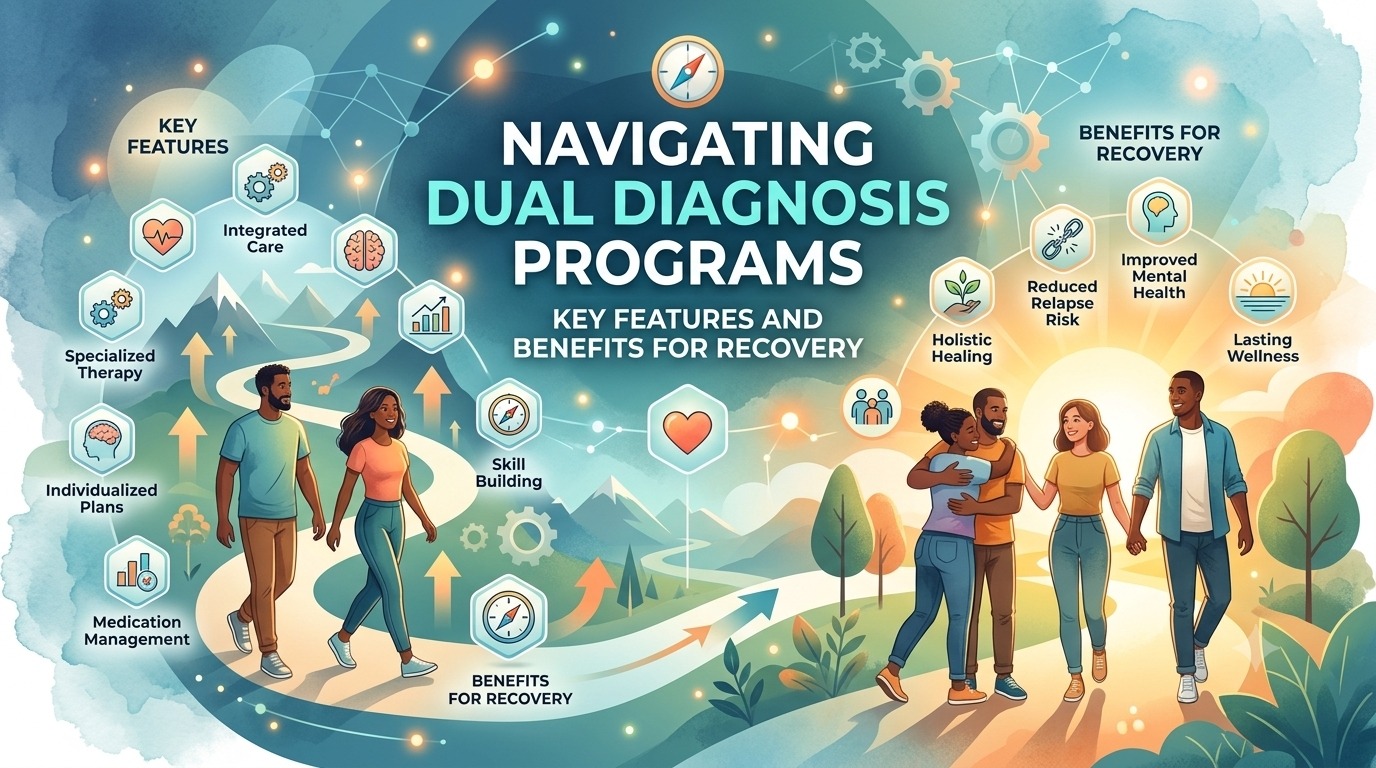
Dual diagnosis treatment centers are based on coordinated care models where mental health care is provided together with addiction care. Multidisciplinary teams collaborate to achieve cohesiveness and transparency.
Core principles include:
- Unified treatment planning
- Ongoing communication
- Evidence-based interventions
- Individualised care patterns.
One of the methods of enhancing results is coordination.
Comprehensive Assessment and Diagnosis
The treatment begins by critically assessing substance use habits, psychiatric symptoms, medical history, and psychosocial aspects. Proper diagnosis aids in proper planning of treatment.
Assessment evaluates:
- Symptom severity
- Functional impairment
- Risk factors
- Treatment history
Effective diagnosis prevents inappropriate care.
Evidence-Based Therapies in Dual Diagnosis Care
Effective dual diagnosis treatment centers rely on therapies supported by research instead of anecdotal methods.
Common therapeutic approaches include:
Therapy | Purpose |
Address distorted thinking | |
Improve emotional regulation | |
Address trauma-related symptoms | |
Develop insight and accountability | |
Explore co-occurring dynamics |
Therapy selection is individualized.
Looking for Addiction or Mental Health Treatment in Florida?
Find expert help for addiction and mental health at Florida Atlantic Coast Treatment Solutions. Start your journey today.
Role of Psychiatric Care
Psychiatric supervision is important in dual diagnosis treatment. Psychiatrists assess symptoms of mental health issues, track medication, and enable effective and safe recovery processes.
Psychiatric care supports:
- Diagnostic accuracy
- Symptom stabilization
- Medication safety
- Crisis prevention
- Continuous monitoring is beneficial.
Expert Advice: “Integrated care addresses addiction and mental health simultaneously, reducing relapse risk significantly.”
Medication Management in Dual Diagnosis Treatment
Some people benefit from the use of psychiatric medications as part of the total treatment. Medication decisions are made on an individual basis and are continuously reviewed.
The goals of medication management include:
- Stabilize mood or anxiety symptoms
- Improve the engagement of therapy
- Reduce symptom severity
- Medication is not a single intervention.
Contact Florida Atlantic Coast Treatment Solutions for dual diagnosis treatment support
Trauma-Informed Care in Dual Diagnosis Centers
Trauma is very common in those who suffer from co-occurring disorders. Trauma-informed care refers to an understanding of how past experiences are able to influence current behaviours and symptoms.
The emphasis of trauma-informed treatment includes:
- Emotional safety
- Trust and transparency
- Empowerment
- Avoidance of retraumatization.
This approach helps to improve treatment retention.
Levels of Care in Dual Diagnosis Treatment
Dual diagnosis treatment services are offered on a hierarchy of care depending on one’s needs and ability to function.
Level of Care | Description |
Intensive, structured environment | |
Daytime programming | |
Structured therapy with flexibility | |
Ongoing maintenance care |
Placement is determined.
FACT: Integrated dual diagnosis treatment improves long-term recovery outcomes.
Importance of Structured Environments
Early recovery often benefits from structured routines where exposure to triggers is decreased, and routines become predictable. One of the most important things that most dual diagnosis treatment centers emphasize is consistency.
- Structured care supports:
- Emotional regulation
- Habit formation
- Reduced decision fatigue
- Stability supports healing.
Family Education and Support Services
Addiction and mental health conditions affect families at a profound level. Many dual diagnosis programs offer family education in order to enhance understanding and communication.
Family services may include:
Psychoeducation sessions
Boundary-setting guidance
Support planning
Participation respects the client’s consent.
Relapse Prevention for Co-Occurring Disorders
Relapse prevention strategies are aimed at both triggering factors related to the substance and mental health symptom relapse. Dual diagnosis programs are focused on skill-building.
The following are the key topic areas of relapse prevention:
- Emotional awareness
- Stress management
- Coping strategies
- Ongoing support networks
- Preparation minimises setbacks led by crisis.
Aftercare and Continuity of Care
The process of recovery does not end with formal treatment. Dual diagnosis centers have aftercare planning at the top of their list in order to ensure progress and stability.
Some of the aftercare planning may include:
- Continuing therapy referrals
- Psychiatric follow-up
- Community involvement in support
- Continuity results in low risks of relapse.
Choosing a Dual Diagnosis Treatment Center
The key to choosing the treatment center is to look for quality rather than amenities or promises. Ethical centers have a focus on transparency and evidence-based care.
Key indicators include:
- Licensed professionals
- Integrated models of treatment
- Individualized care plans
- Clear admission criteria
- The right choice makes a big difference.
Addressing Stigma Around Dual Diagnosis
Stigma may deter people from seeking care through integration. Dual diagnosis treatment approaches addiction and mental health issues from a medical standpoint as conditions that can be treated.

Asking for help demonstrates responsibility as well as a willingness to be aware of yourself, not failure.
The process of managing addiction and mental health symptoms can be an overwhelming task if treatments are disjointed and incomplete. Dual diagnosis treatment centers provide coordinated and structured treatment to both of these conditions with precision and compassion. Integrated treatment provides clarity, stability and a better foundation for a long-standing recovery and higher quality of life.
Contact Florida Atlantic Coast Treatment Solutions for confidential recovery guidance
Medical Disclaimer: This Blog is for informational purposes only and is not a substitute for professional medical advice.
Key Takeaways
- Dual diagnosis involves addiction and mental health conditions together.
- Separate treatment of conditions leads to a high risk of relapse.
- Integrated treatment is great for the overlapping symptoms.
- Evidence-based therapies are utilized when planning for recovery.
- Structured environments are supportive of stabilization and engagement.
- Aftercare planning enables the progression of recovery to be continued in the long run.
FAQs
What is dual diagnosis treatment?
Dual diagnosis treatment addresses substance use and mental health challenges together through integrated planning and structured support. Rather than separating conditions, this approach recognizes how symptoms interact and influence one another. Treating both simultaneously improves emotional stability, engagement, and long-term recovery outcomes across diverse populations.
Who benefits from dual diagnosis programs?
Individuals experiencing substance use alongside anxiety, depression, trauma-related symptoms, or mood instability often benefit most. When emotional distress and substance use reinforce each other, integrated treatment provides coordinated strategies that reduce relapse risk while strengthening coping, insight, and daily functioning over time.
How long does dual diagnosis treatment last?
Length varies based on needs, severity, and progress. Many individuals begin with higher structure and gradually transition to lower levels of support. Recovery is viewed as an ongoing process rather than a fixed timeline, with continued engagement playing a key role in long-term stability.
Are family members involved in dual diagnosis treatment?
Yes. Many programs include family education and support to improve communication, reduce conflict, and strengthen recovery environments. Helping loved ones understand overlapping challenges allows families to support progress without reinforcing unhealthy dynamics or unrealistic expectations during recovery.
What happens after completing a dual diagnosis program?
After completion, individuals typically continue with outpatient support, counseling, or peer groups. Aftercare planning helps maintain structure, reinforce coping skills, and address emerging challenges. Continued engagement significantly reduces relapse risk and supports long-term emotional and behavioral stability.
Does dual diagnosis treatment really work?
Research consistently shows integrated treatment improves engagement, retention, and long-term outcomes compared to treating conditions separately. By addressing root causes and behavioral patterns together, dual diagnosis programs support sustainable recovery rather than short-term symptom management.