In This Blog
- Defining Relapse in the Context of Recovery
- What Relapse Is Not: Misconceptions Debunked
- The Three Stages of the Relapse Process
- Recognizing Warning Signs and Triggers
- The Importance of a Monitored Setting
- Building Resilience Through Recovery Services
The path to sobriety is not always a linear path. The term relapse has become heavy in weight to most people who are having to deal with the dynamics of substance use, which is often obscured by stigma, shame, and misperception. In order to create a healthy environment in the recovery service setting, it is vital to come up with what this experience entails. Relapse is not an isolated event or an indicator of moral frailties but a fact that is well recorded in the literature on the chronicity of addiction. It is a stage at which a person resumes substance use after some time of withdrawal.
Nonetheless, it is equally important to know what not a relapse is in order to succeed in the long run. It is not a failure symptom and it does not imply that past gains in a treatment environment have been undone. The evidence-based approach to the process enables people and their support networks to react to the process with professionalism instead of judgment. With the help of the deconstruction of the myths associated with this topic, it becomes easier to comprehend how to use structured care to avoid future events and sustain the process of a healthy life.
Expert Advice: Professional oversight helps individuals reframe relapse as a pivot point for growth.
Defining the Relapse Process
Relapse is widely understood by experts as a process rather than a spontaneous moment of choice. It often begins weeks or even months before an individual actually consumes a substance. This progression moves through emotional and mental stages where the individual’s coping mechanisms begin to erode. Identifying this process early is the primary goal of many recovery services.
In a monitored setting, the focus is on recognizing the internal shifts that lead to a return to use. This includes changes in sleep patterns, withdrawal from social support, and the return of old thought patterns. By viewing relapse as a gradual process, individuals can intervene during the earlier stages, effectively stopping the cycle before it reaches a physical return to the substance.
What Relapse is Not: Common Misconceptions
To move forward effectively, it is vital to clear away the misconceptions that often prevent people from seeking supervised support after a setback.
Relapse is Not a Failure of Willpower
Addiction is a chronic condition that affects the brain’s reward and stress systems. Therefore, a return to use is a symptom of a condition, not a reflection of a person’s character or strength. In a professional treatment environment, the focus remains on neurochemical stabilization and behavioral training rather than moral judgment.
Relapse is Not a Total Reset
A common fear is that a relapse “zeros out” all the days of sobriety previously achieved. This is inaccurate. The skills learned, the physical healing that occurred, and the psychological insights gained during a period of structured care remain with the individual. A return to use is a detour, but the knowledge and progress acquired during previous recovery services are still foundational assets.
Misconception | Fact-Based Reality |
It means treatment failed. | It indicates a need for a change in the care plan. |
The individual is “starting over.” | The person retains all prior knowledge and growth. |
It happens suddenly. | It is almost always a slow, three-stage process. |
For information on supervised support, contact Florida Atlantic Coast Treatment Solutions
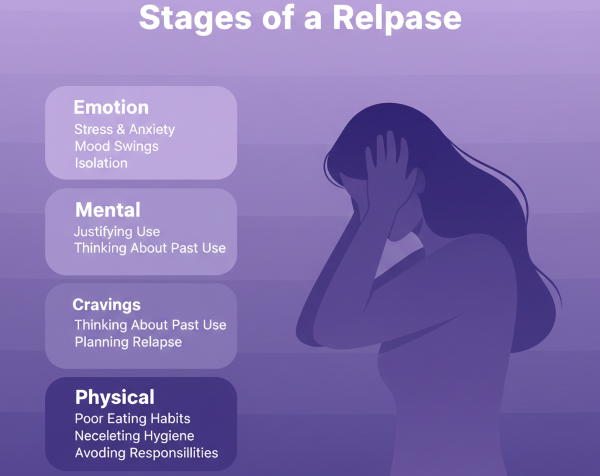
The Three Stages of Relapse
Understanding the stages of a return to use allows for better self-awareness and more effective professional oversight.
Emotional Relapse
In this first stage, the individual is not consciously thinking about using. However, their emotions and behaviors are setting the stage. They may stop attending support groups, bottle up their emotions, or neglect basic self-care like sleep and nutrition.
Mental Relapse
During this stage, a “war” goes on inside the mind. Part of the individual wants to stay sober, while another part begins to glamorize past use. They may start lying, hanging out with old acquaintances, or “bargaining” thinking they can use just a little bit or only on special occasions.
Physical Relapse
Physical relapse is the final stage, where the individual actually consumes the substance. While this is the most visible stage, it is the result of the cumulative pressure built up during the emotional and mental phases. In a monitored setting, the goal is to provide the tools to navigate the first two stages so the third never occurs.
Recognizing Internal and External Triggers
Triggers are the catalysts that can accelerate the relapse process. These can be external, such as specific people, places, or smells associated with past use. They can also be internal, often described by the acronym HALT: Hungry, Angry, Lonely, or Tired.
Effective recovery services focus on “trigger management.” This involves identifying an individual’s unique high-risk situations and developing a plan to navigate them. This might include role-playing social interactions in a monitored setting or learning stress-reduction techniques to manage emotional volatility. By addressing triggers proactively, the individual gains a sense of agency and control.
Trigger Category | Examples |
Environmental | Old neighborhoods, specific holidays, or certain social circles. |
Emotional | Stress at work, grief, boredom, or overconfidence. |
Physical | Chronic pain, exhaustion, or sudden illness. |
For professional help with recovery services, call Florida Atlantic Coast Treatment Solutions
The Role of a Structured Treatment Environment
A structured treatment environment provides a safety net that is difficult to replicate in daily life. When the early warning signs of an emotional or mental relapse appear, having access to professional oversight ensures that the individual has a place to process these feelings safely.
In this setting, the focus is on “relapse prevention” rather than just “abstinence.” This involves deep cognitive work to dismantle the thought patterns that lead back to substance use. Supervised support allows for the constant refinement of a person’s recovery plan, ensuring it remains relevant to their current challenges and environment.
FACT: Relapse is a common but manageable part of chronic condition recovery.
Resilience and the Growth Mindset
Overcoming a return to use requires a growth mindset. Instead of viewing a setback as a dead end, it is viewed as data. What was the trigger? Which coping skill was missing? How can the recovery services plan be adjusted to prevent this in the future? This approach builds resilience.
Building this resilience often involves a combination of therapy, peer support, and lifestyle changes. In a monitored setting, individuals learn that they are capable of navigating difficult emotions without the need for substances. This confidence is a key predictor of long-term success.

Continuity of Care and Long-Term Success
Recovery is a lifelong commitment that requires a continuum of support. After an initial period of intensive care, transitioning into ongoing recovery services is vital. This ensures that as an individual returns to work and family life, they still have a structured setting to return to for guidance and accountability.
Professional oversight through various levels of care from outpatient services to alumni programs helps maintain the focus on health.
Florida Atlantic Coast Treatment Solutions provides a structured treatment environment where individuals can receive supervised support throughout the various stages of recovery. Our focus is on offering professional oversight and evidence-based recovery services to help those navigating the challenges of maintaining sobriety. We emphasize a comprehensive approach to care that prioritizes the safety and well-being of every person in our monitored setting.
Medical Disclaimer: This blog is for informational purposes only and is not a substitute for professional medical advice.
Key Takeaways
- Relapse is a process that begins with emotional and mental shifts long before physical use.
- A return to use is not a sign of failure or a reset of all previous progress.
- The three stages of the relapse process are emotional, mental, and physical.
- Identifying triggers like HALT is essential for proactive relapse prevention.
- Professional oversight and a monitored setting provide the necessary tools for sustainable recovery.
FAQs
What is the difference between a lapse and a relapse?
A lapse is generally considered a brief, one-time return to substance use, followed by a quick return to abstinence. A relapse is often a more significant return to old patterns of behavior and use. Both situations require professional oversight to assess the individual’s needs and adjust their recovery services plan.
How can I tell if someone is relapsing emotionally?
Signs of emotional relapse include isolating from friends, skipping support meetings, and neglecting hygiene or sleep. The individual might seem more irritable or defensive than usual. In a monitored setting, these behaviors are identified early so that supervised support can be provided before the process moves to the mental stage.
Does a relapse mean the treatment didn’t work?
Not at all. Relapse is often a sign that the current treatment environment or recovery plan needs to be adjusted. It may indicate that the individual needs more intensive structured care or different coping strategies to handle new stressors that have arisen in their daily life since their initial detox.
Is it common for people to relapse?
Relapse rates for substance use are similar to those for other chronic conditions like asthma or hypertension. Because it is a common part of the journey for many, professional recovery services focus on long-term management and building the resilience necessary to return to health quickly if a setback does occur.
How do I get help after a relapse?
The first step is to contact a professional recovery service provider immediately. Seeking supervised support in a monitored setting ensures your safety and helps you identify the triggers that led to the event. A treatment environment provides a non-judgmental space to restart your journey and strengthen your long-term sobriety plan.
References
- National Institute on Drug Abuse (NIDA)
- Substance Abuse and Mental Health Services Administration (SAMHSA)
- National Institutes of Health (NIH)
- American Psychological Association (APA)
- Journal of Addiction Medicine